
Commercial Plumbing
Understanding Commercial Plumbing: A Comprehensive Guide
Commercial plumbing is one of those building systems that rarely gets applause when it works and immediately gets attention when it doesn’t. In offices, restaurants, schools, warehouses, medical facilities, and multi-tenant properties, plumbing performance affects safety, reputation, operating costs, and tenant satisfaction.
Commercial plumbing services sit at the intersection of engineering, code compliance, and practical uptime. The goal is not only to fix leaks and clogs, but to keep water moving reliably, keep drains sanitary, and keep critical spaces open for business.
Why commercial plumbing is different from residential work
Commercial buildings place higher and more variable demands on plumbing systems. The fixtures are used by more people, often in waves. The piping networks are larger, pressures can be higher, and equipment rooms may include specialized devices like backflow preventers, booster pumps, grease interceptors, or mixing valves.
There’s also the “cost of interruption” factor. A shut-down restroom bank, a leaking riser, or a kitchen drain outage can stop operations, trigger health department issues, or create a cascade of tenant complaints. That reality shapes how commercial plumbers plan diagnostics, scheduling, and repair methods.
Finally, documentation matters more. Many properties require service tickets, compliance records, as-builts, permit coordination, and clear communication with facility managers, general contractors, and inspectors.
The service landscape: what commercial plumbers typically handle
Commercial plumbing services cover a wide range, from routine maintenance to complex retrofit work. The work often includes domestic water distribution, sanitary and vent systems, storm drainage, and specialty components that support fire protection or process needs.
After a quick site assessment, service teams commonly focus on:
- Restroom fixture repairs
- Drain cleaning and hydro jetting
- Water heater and boiler-adjacent piping
- Backflow testing and repair
- Leak detection and pipe repair
- Grease interceptor maintenance and replacement
The scope varies by property type. A restaurant cares deeply about grease and odor control, while a high-rise office may prioritize pressure balancing, isolation valves, and rapid response for tenant spaces.
Core systems you’re paying to protect
A smart commercial plumbing plan starts with knowing the systems that quietly carry risk.
Domestic water and pressure management
Commercial domestic water systems may rely on pressure-reducing valves, booster pumps, recirculation loops, and mixing valves to keep temperatures stable and pressures within acceptable ranges. Poor pressure control can increase water hammer, accelerate fixture wear, and raise the odds of pinhole leaks in vulnerable piping.
Sanitary drainage, venting, and interceptors
Drainage problems are not just an inconvenience. Chronic backups can damage finishes, disrupt tenants, and create sanitation concerns. In food service and some industrial settings, interceptors are non-negotiable. When they are undersized or poorly maintained, the symptom is often recurring clogs that keep coming back no matter how many times the line is snaked.
Hot water generation and distribution
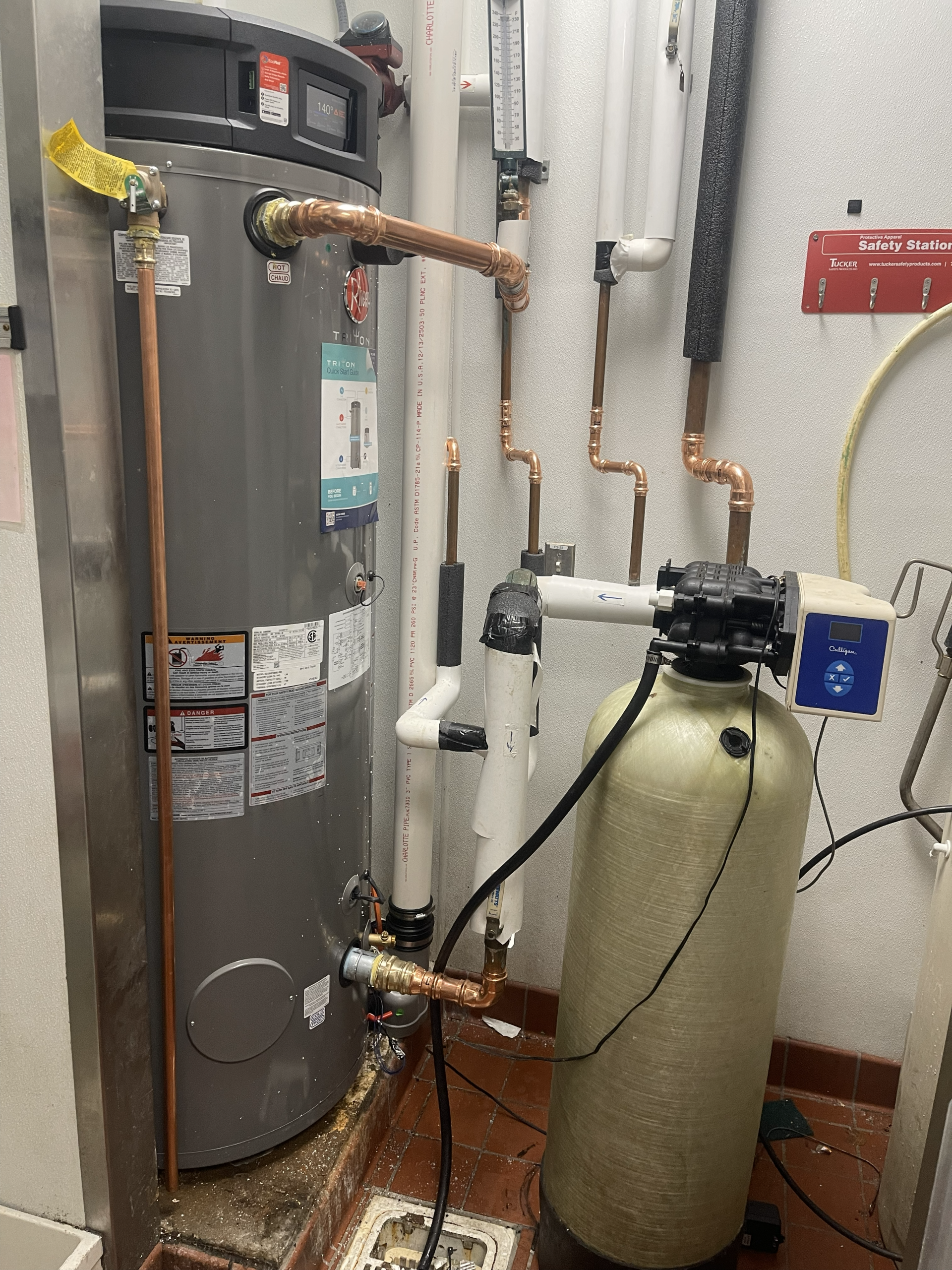
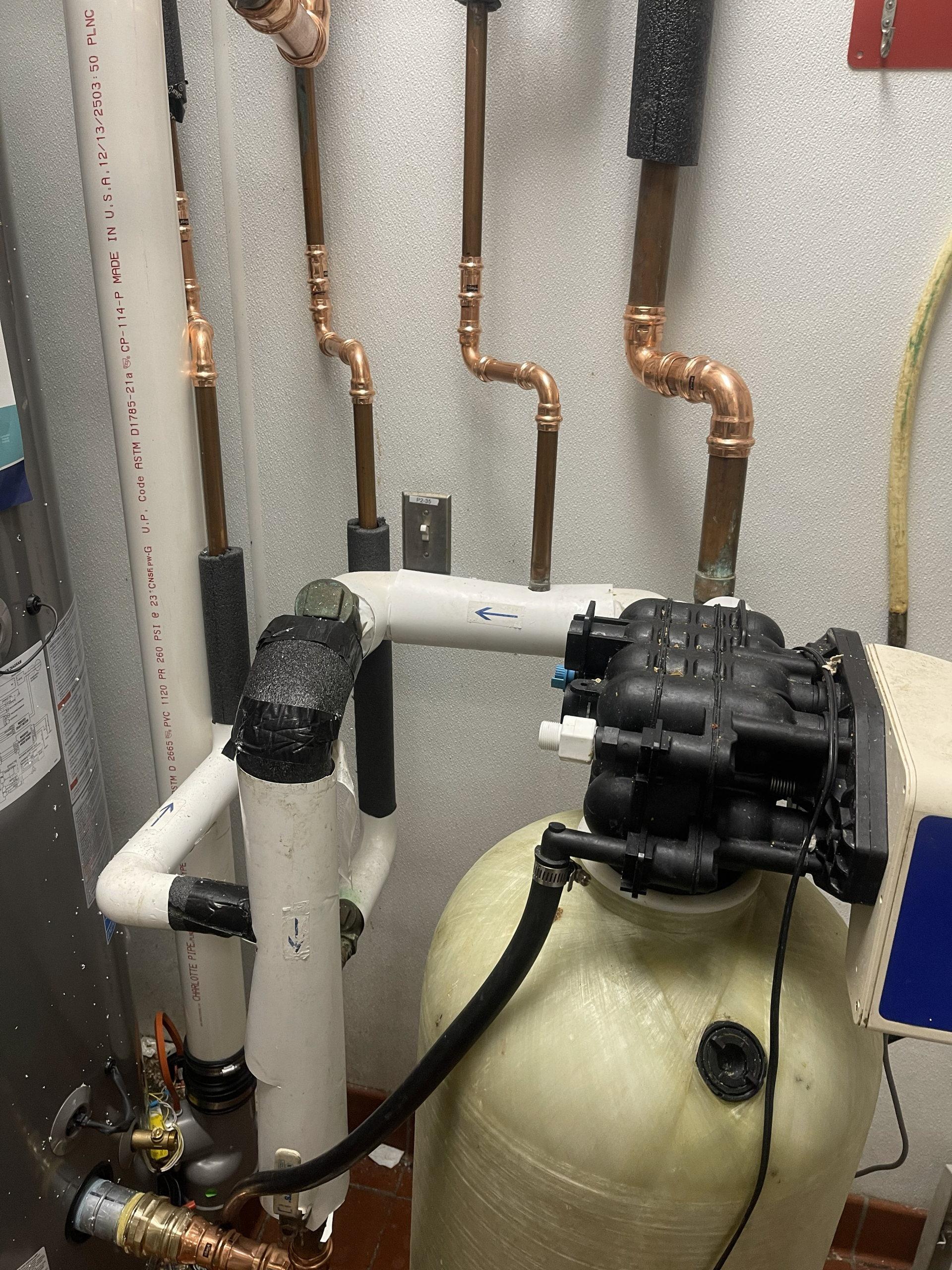
Hot water is a business requirement in many facilities. Even when the water heater is technically “working,” distribution issues can create long wait times at fixtures, temperature swings, or scalding risk. A commercial plumber looks at the whole loop: heaters, mixing, recirc pumps, check valves, and the balancing valves that keep the farthest fixtures supplied.
Backflow prevention and cross-connection control
Backflow devices protect potable water from contamination. Many jurisdictions require periodic testing and documentation. A commercial plumbing provider often coordinates testing schedules, repairs, and paperwork so the facility stays compliant without last-minute scrambling.
Common commercial plumbing calls and what they often mean
Service calls tend to cluster around a few recurring issues. The key is treating the immediate symptom while also asking why it happened.
A repeated toilet clog in the same restroom may indicate a partial obstruction farther down the branch line, a poor fixture match for the use pattern, or a venting problem that reduces flushing performance. A “mysterious” spike in water bills can point to a running flush valve, an underground leak, or a stuck make-up water valve tied to mechanical equipment.
These are frequent signals facilities teams see:
- Slow drains after busy periods
- Odors near floor drains or mop sinks
- Fluctuating water temperature at hand sinks
- Water hammer after fixture shutoff
- Staining on ceilings below restrooms
Each symptom has multiple possible causes, so commercial plumbing service shines when it pairs experienced troubleshooting with the right tools: camera inspection, pressure logging, thermal imaging where appropriate, and isolation testing to narrow down the source quickly.
Preventive maintenance that keeps buildings open
Reactive repairs cost more when they include after-hours labor, water damage, tenant disruption, and emergency mitigation. Preventive maintenance reduces those “surprise” events and turns plumbing into a planned operating expense.
A workable program is not about doing everything all the time. It is about picking the checks that match your building type, age, and risk profile. Many facilities combine scheduled site walks with targeted services like drain maintenance, fixture rebuild cycles, and annual device testing.
Here is a practical view of what a maintenance calendar can include:
| Service area | What gets checked | Frequency | Benefit |
|---|---|---|---|
| Restroom fixtures | Flush valves, sensor operation, supply stops, aerators | Quarterly | Fewer running fixtures and call-backs |
| Drain lines | Spot cleaning, camera inspection for repeat offenders | Semiannual | Less downtime from backups |
| Water heaters and recirc | Temperature setpoints, mixing valves, pump function | Semiannual | Stable hot water and lower scald risk |
| Backflow devices | Test, certify, repair as needed | Annual (often required) | Compliance and potable water protection |
| Isolation valves | Exercise valves, label and map critical shutoffs | Annual | Faster response during leaks |
| Grease interceptor | Pumping, baffle condition, inlet/outlet verification | Varies by use | Reduced clogs and odor control |
A maintenance plan also creates institutional memory. When staff changes, the building still has a record of what was serviced, what failed, and which areas are chronic trouble spots.
Compliance, permits, and risk management
Commercial plumbing is tied closely to local codes, health department requirements, ADA considerations, and insurance expectations. Even a “simple” replacement can trigger permitting rules, seismic bracing requirements, or backflow provisions depending on the jurisdiction and the scope.
Good commercial plumbing service includes clear guardrails:
- Permitting strategy: what work needs permits, who pulls them, and how inspections are scheduled
- Shutdown planning: which valves isolate the area, how long the interruption lasts, and what spaces are affected
- Documentation: device test reports, fixture counts where required, and service logs for compliance files
Risk management also includes safety and cleanliness. Dust control, access management, and clear signage matter more in occupied commercial settings than in a single-family home, since the work happens around employees, customers, patients, or students.
Choosing a commercial plumbing service provider
A commercial plumber is not just a technical resource. They become part of your operational rhythm. The best fit is usually the team that can combine responsiveness with planning.
Look for signals that the provider is prepared for commercial realities: structured dispatch, clear estimates, after-hours protocols, and technicians who are comfortable coordinating with property management and tenants. Ask how they document findings and how they prioritize repairs when everything feels urgent.
A practical evaluation often includes a mix of capabilities and communication habits:
- Response model: standard hours, emergency coverage, and how triage works
- Diagnostics approach: camera inspection, pressure testing, leak detection methods, and how findings are shared
- Parts and specs: comfort with commercial-grade fixtures, flushometers, sensors, and valve rebuilds
- Project coordination: ability to sequence work with other trades and meet inspection timelines
Clear expectations prevent frustration. When both sides agree on service windows, tenant notices, and approval thresholds, the relationship becomes calmer and more productive.
Planning upgrades and retrofits without disrupting operations
Many commercial plumbing “projects” begin as service calls. A recurring leak may reveal failing galvanized piping. A restaurant that keeps clogging may need interceptor resizing or a better cleanout layout. A high-traffic restroom with constant sensor issues might benefit from standardization to fewer fixture models for easier maintenance.
Retrofits work best when they are phased. Instead of touching every restroom at once, a facility can pilot improvements in one area, confirm performance, then roll the approach across the building in planned intervals.
Common upgrade paths include fixture replacements for water performance, adding isolation valves to reduce shutdown impact, replacing failing sections of pipe with modern materials, and reworking drain slopes or cleanout access to make future maintenance faster.
Working smoothly with tenants, staff, and the jobsite
Commercial plumbing does not happen in a vacuum. Access, noise, water shutdowns, and restroom closures all require coordination. The operational side is just as important as the wrench work.
Communication practices that keep projects moving usually include clear signage, advance notices for shutdowns, and a defined point of contact for urgent questions. For multi-tenant buildings, it also helps to map “critical hours” so disruptive work avoids peak occupancy or special events.
When the service provider can explain what’s happening in plain language, facility teams can make better decisions quickly, whether that means approving a repair, authorizing a temporary workaround, or scheduling a larger replacement.
Where commercial plumbing services deliver the most value
The biggest wins tend to show up in three areas: fewer emergencies, lower water waste, and less disruption for occupants. That value grows when service is consistent and documented, not just reactive.
If you’re organizing priorities for the next quarter, start by identifying your top repeat issues, confirm you can isolate the highest-risk zones with working shutoff valves, and schedule the compliance items that cannot slip. With those basics handled, every repair becomes an opportunity to strengthen the system, reduce future downtime, and keep the building running with confidence.